Posts

Reading Notes - Crash Course: Creation and Destruction
Image
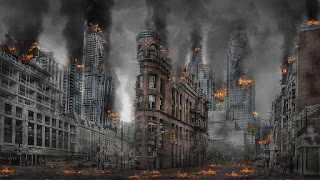
For the extra reading this week I chose to watch the Crash Course Myth videos about creation and destruction. The first creation story mentioned was the traditional Biblical version. Focusing on how humans are the most powerful life followed by other animals. Conversely, in many other religions and legends human are on a more equal level as animals.   Some legends even say that human arose from within animals. It was also interesting to hear the view that divine intervention is required to put an end to the failure of humanity (and to prevent the apocalypse). It was also interesting to see how 1) general destruction and 2) punishment and judgement are central themes in almost all apocalyptic mythology. It was really cool to learn about the differences in apocalyptic stories between different religions, such as between Christianity and Islam. I am interested in potentially writing a story about the apocalypse in the future. Apocalypse War Source: Pixabay
Week 6 Story: The Birth of Noah

Image
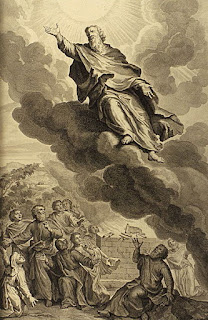
Updated Version in my Portfolio  The Life of Noah There was once a man named Lamech. As he was continuing to grow older, he desired a life filled with family: a wife and a child. For many, many years this longing was left unfilled. Lamech begin to feel as if he would never be a father. Then, as if it was fate, Lamech met the woman of his dreams, and they became married. Lamech and his wife lived a happy and quiet life on a beautiful farm in the hills. Although his heart was happy, he still felt a longing to become a father. Lamech’s wife soon became pregnant. One day while working together on the farm, Lamech’s wife said, “It is time.” Lamech was overcome with joy. He was finally going welcome his baby boy into the world and become a father. But, what came next no one expected. The baby did not look or act like a normal baby. Instead, the baby had characteristics of both a man and angel. The baby had locks of hair that were white as snow that challenged a grown mans. His...

Reading Notes: Life of Buddha, Part B

Image
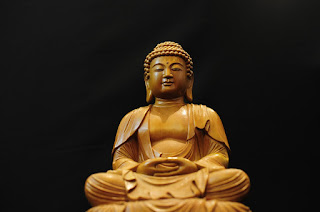
For the second part of the Life of Buddha   reading, I chose to focus on the story where Siddhartha Becomes the Buddha . Overall, I really enjoyed reading this unit. From the beginning when Queen Maya had a dream, to the birth of Siddhartha, Siddhartha's life, and then Siddhartha becoming Buddha. It has been really interesting to follow this story and see how it progresses. I find the statement, "There is old age and death because there is birth." to be very interesting... and philosophical. It is a unique perspective on life and death. Also, it was interesting to see how the significance progresses from old age/death to birth, from birth to existence, from existence to ties, etc. It was interesting to see the thought process in this paragraph basically explaining the reason for life. I also found the sentence, "By leading a life of holiness, desire is stifled, and we cease to endure birth and suffering." to be quite interesting. I'll admit I am havin...

Reading Notes: Life of Buddha, Part A

Image
This week I chose to read The Life of Buddha . I chose to read this unit because this is a topic I am very unfamiliar with, and I would like to learn more about it. For my reading notes this week I am going to focus on Maya's Dream . I chose to focus on this story in particular because I like how it is written, and it introduces Buddha to the world. Maya is the Queen and the King is Suddhodana. This story details a symbolic dream Queen Maya had about having a child. The Queen described this dream... this feeling as knowing she would never hate or become angry again. Once she awakes happily, she summons the King. A sentence that stood out to me was, "He [Buddha] has chosen your family to be his family because of its fame, good fortune and virtue..." I think this is an interesting comparison to Christianity in that Jesus became the lowest of the low; compared to how Buddha chose a life of wealth and fame (from what I understand from this unit). This story is writ...

Tech Tip: Canvas Dashboard

This week, I chose to explore the Tech Tip regarding the Canvas Dashboard. I think it is nice that you can customize the title and color/picture of the courses on your dashboard. I do wish there was a way you could rearrange the courses/cards into the order you would like them. I think it would also be neat if we could create folders that could include multiple courses like you can with apps on the iPhone. 

Reading Notes: David, Part B

Image
For the second part of the reading this week, I chose to continue reading Folklore of the Holy Land: Moslem, Christian and Jewish . In this blog, I would specifically like to focus on the story of David , which was written by J. E. Hanauer in 1907. In my last reading notes blog I discussed the Ancient Middle East version of Noah and the Ark. Similarly, I am familiar with the Christian version of the story of David. It was interesting to see how the two versions are related to each other but, at the same time, also very different. As I noted in my last blog, I feel as if the Ancient Middle East version provides more details than does the Christian version. Additionally, certain parts of this story made obvious the differences between the two different faiths--particularly the ending. I have read several biblical stories for this class and most have been excerpts from the King James Bible. This story (and also the one about Noah) are different in that they are written in m...

Reading Notes (EC) - CrashCourse: Flood Stories

For the extra-credit reading this week I chose to watch the CrashCourse videos about Flood Stories . It was interesting learn how popular flood myths are in many different cultures. Also, referencing the first set of CrashCourse mythology videos, it was interesting to see how historic events--like floods--can become a very popular source of mythology stories. I especially liked the story about the ark that was an acre in area and six decks tall! It was also interesting to see the similarities between different flood stories and the biblical story: Noah and the Ark. For example, sending out a dove and raven to see if there was any dry land. It was interesting that Mike pointed out, any civilization located near water has a flood myth.